
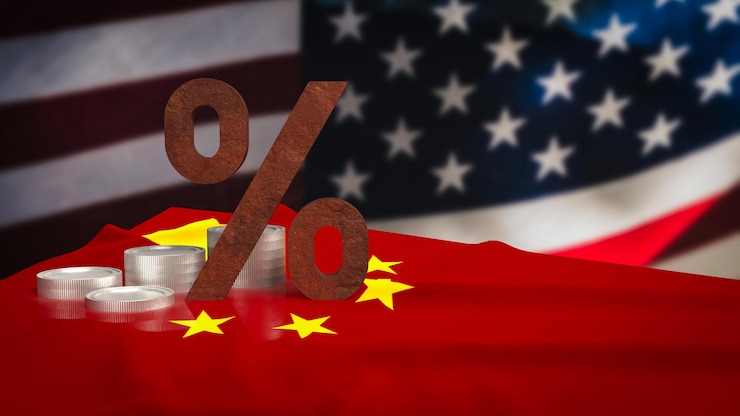
2025 US China Tariff Deal: Winners & Losers the global economy is once again at a crossroads as the US China tariff agreement 2025 redefines the dynamics between the world’s two largest economies. After years of escalating tensions, tariffs, and retaliations, Washington and Beijing have inked a landmark agreement that promises both opportunity and uncertainty.
While politicians tout stability and economists examine the nuances, the real story lies in who benefits—and who stands to lose. The implications are vast, ranging from multinational corporations to small-town manufacturers, and from Wall Street financiers to rural farmers.
The Essentials of the Agreement
At the heart of the US China tariff agreement 2025 is a mutual rollback of tariffs imposed during the 2018–2023 trade war period. The deal, negotiated over 18 months, outlines three major provisions:
- Tariff Reductions: The U.S. agreed to reduce tariffs on $350 billion worth of Chinese imports, while China committed to a reciprocal cut on $280 billion of American goods.
- Agricultural Commitments: China pledged to import an additional $70 billion in American agricultural products over the next three years.
- Technology Transfer & IP Protections: China agreed to stricter enforcement of intellectual property protections and limitations on forced technology transfers from U.S. firms.
This reset in policy marks a notable shift from previous confrontational stances, signaling a more pragmatic, if tentative, economic partnership.
Winners: Who Gains from the Deal?
1. American Farmers
Few groups have felt the sting of the trade war more than U.S. farmers. Soybeans, corn, pork, and dairy exports to China plummeted in the face of retaliatory tariffs. Now, with the US China tariff agreement 2025 in effect, Chinese buyers are flooding back into U.S. grain markets.
Midwestern agriculture is poised for a revival. Already, futures prices for soybeans have surged, and rural economies are seeing upticks in employment and investment. Farm equipment manufacturers like John Deere are also seeing a positive ripple effect.
2. Chinese Tech Giants
Under the new agreement, U.S. export controls on certain mid-tier semiconductors and telecom components have been eased. Companies like Xiaomi, Lenovo, and DJI stand to benefit tremendously as supply chain friction decreases.
This loosening of restrictions enables Chinese firms to regain access to critical technology, accelerating their innovation cycles and reducing dependency on domestic substitutes that were not up to par.
3. U.S. Retailers and Consumers
The rollback of tariffs on goods like electronics, toys, clothing, and furniture is a boon for retailers. Companies such as Walmart, Target, and Best Buy can now offer lower prices without the burden of additional import duties.
For American consumers, the change may feel subtle but impactful—cheaper smartphones, reduced costs on holiday shopping, and a general easing of inflationary pressure on household goods.
4. Wall Street
Financial markets love certainty. The announcement of the US China tariff agreement 2025 triggered an immediate rally across major indices. Investors are optimistic that global supply chains will stabilize, earnings forecasts will strengthen, and the threat of a global trade war will further recede.
Investment firms with exposure to emerging markets, such as BlackRock and Vanguard, have seen increased flows, anticipating renewed growth in Asia-Pacific equities.
Losers: The Unintended Casualties
1. Domestic Manufacturers Competing with China
For American manufacturers who produce low to mid-cost consumer goods, the tariff rollback is a double-edged sword. While they benefit from cheaper components, they now face stiffened competition from a renewed influx of Chinese imports.
Firms in textiles, plastic goods, and basic electronics are once again contending with price undercutting by Chinese rivals. Calls for subsidies and protective measures have already begun to echo through Capitol Hill.
2. U.S. Tech Hawks
Hardliners who advocate for technological decoupling view the US China tariff agreement 2025 as a compromise of national security. They argue that easing tech restrictions allows potential adversaries to access sensitive know-how.
Critics warn that the reduced barriers could lead to renewed Chinese cyberespionage and an erosion of America’s tech edge. These concerns may spur future legislative countermeasures, threatening the longevity of the deal.
3. Chinese State-Owned Enterprises (SOEs)
Part of the agreement includes an enforcement mechanism requiring transparent accounting and limited subsidies for Chinese SOEs. This could significantly restrain their expansion, particularly in global infrastructure projects under the Belt and Road Initiative.
With increased scrutiny and less financial cushioning, many SOEs may see their growth throttled. Private Chinese enterprises, ironically, are now positioned more favorably in both domestic and international markets.
4. Smaller Exporters in Southeast Asia
During the height of the U.S.–China trade conflict, countries like Vietnam, Thailand, and Indonesia stepped in to fill supply chain gaps. However, the US China tariff agreement 2025 threatens to reverse these gains.
With China regaining its manufacturing foothold, smaller exporters may lose recent contracts and investments. Their economic momentum—built on being alternatives to China—could slow as global companies return to Chinese partners.
The Political Calculus
President Biden’s administration heralded the agreement as a win for diplomacy and economic pragmatism. It also represents a calculated move heading into the 2026 midterms. Restoring farmer support and curbing inflation could tip electoral scales in key battleground states.
In China, President Xi faces his own pressures. The deal serves as evidence of his leadership’s ability to stabilize international relations amid internal economic headwinds. However, nationalist factions remain wary of perceived concessions to the West.
Strategic Implications
The US China tariff agreement 2025 is more than a commercial accord—it’s a barometer for future diplomacy. It sets a precedent for resolving friction through negotiation, potentially influencing issues beyond trade, such as climate collaboration, cyber policy, and military communications.
Furthermore, it sends a message to global institutions like the WTO and IMF that the U.S. and China are still capable of bilateral consensus, even in a polarized world.
Business Sector Reactions
- Automotive Industry: Companies like Tesla and GM are optimistic, with renewed access to battery components and EV materials sourced from China.
- Pharmaceuticals: Joint ventures between American and Chinese biotech firms are being revived, especially in vaccine research and cancer therapies.
- E-Commerce: U.S. and Chinese online platforms, such as Amazon and Alibaba, see cross-border sales surging, especially during global shopping festivals.
Environmental Consequences
The agreement includes a sub-clause on sustainability, promoting green supply chain standards and clean tech cooperation. While vague, this clause encourages companies to adopt ESG-compliant practices and could pave the way for future climate-related accords.
Still, critics caution that implementation remains weak without stringent enforcement tools.
Consumer Perspective: What’s Changing in Everyday Life?
- Electronics: Expect price drops in smartphones, laptops, and accessories.
- Fashion: Lower costs for fast fashion items as Chinese textile imports rise.
- Groceries: Increased exports mean steadier income for U.S. farmers, potentially reducing food price volatility.
- Home Goods: Furniture and decor prices may decline with tariff rollbacks.
The average consumer may not feel the full impact immediately, but over time, broader affordability and product variety will be evident.
Looking Ahead
The US China tariff agreement 2025 is not a panacea. It is a delicate balancing act, forged in compromise and diplomacy. It addresses immediate economic pain points, yet leaves many deeper structural tensions unresolved.
Whether it becomes a stepping stone to enduring stability or merely a temporary ceasefire remains to be seen. What’s clear is this: the global economic landscape has shifted, and the ripple effects will be felt in boardrooms, ballot boxes, and household budgets across the world.


More Stories
Optimising UK ISA Contributions: Return Scenarios, Compounding Effects, and Portfolio Growth Modelling
Merchant Cash Advance for Seasonal Businesses Managing Revenue Swings
Building Trust, Sustaining Success: The Unseen Power of Business Integrity